Monsoon-Season Parking Lot Cleaning in San Antonio
Monsoon-style rains in San Antonio hit hard and fast. Those intense early-summer storms can turn a clean parking lot into a mess of standing water, slippery spots, and blocked drains in a short amount of time. When that happens, problems show up in the form of flooding, pavement damage, and safety hazards for drivers and pedestrians.
Parking lots that are not cleaned often collect dirt, silt, trash, oil, and chemicals. During heavy storms, all of that gets pushed into drains, low spots, and nearby landscaping. In this article, we will walk through how these storms affect your parking lot, what causes drainage failures, and how professional cleaning helps keep your property safer and looking good all season long. As a local pavement team serving the San Antonio area, we see these problems up close and know what it takes to get ahead of them.
How San Antonio Monsoon Rains Impact Your Lot
San Antonio and the Hill Country are known for short, intense rain events. Streets can be dry one minute, then covered in fast-moving water the next. Parking lots feel that same pressure. When drains cannot keep up, water backs up across parking spaces and drive lanes.
Here is what usually happens during these storms:
- Water flows across the lot, picking up loose gravel, dirt, and trash
- That mix settles into low spots and around drains
- Standing water forms, creating slip and trip hazards
- Pavement stays wet longer, which speeds up wear and tear
Frequent wet and dry cycles are tough on asphalt and concrete. When water seeps into small cracks, then vehicles roll across the surface, those cracks grow. Over time, you may notice:
- More cracking and raveling in traffic lanes
- Potholes forming in areas that stay damp
- Faded striping that is harder to see in the rain
Regular parking lot cleaning in San Antonio, TX before and during monsoon season helps limit this damage by keeping the surface clear and drainage paths open.
Why Drainage Failures Start with Dirt, Silt, and Debris
Drainage issues rarely start during the storm. They build up over the dry months. Wind blows soil across your lot. Landscaping beds lose mulch during windy days. Leaves drop into grates. Trash collects along curbs. It may not look like much at first, but it slowly chokes your drainage system.
Common trouble spots include:
- Trench drains packed with silt and small rocks
- Grates covered with leaves, mulch, or plastic trash
- Inlets filled with dirt that has washed in from drive lanes
When the first big storm hits, all that material moves at once and can quickly block the path where water is supposed to go. Water then spreads out across the parking lot instead of going into the drainage system. This can cause:
- Large puddles or "ponds" in the middle of the lot
- Water flowing back toward buildings or entries
- Undermining of asphalt and concrete around drains
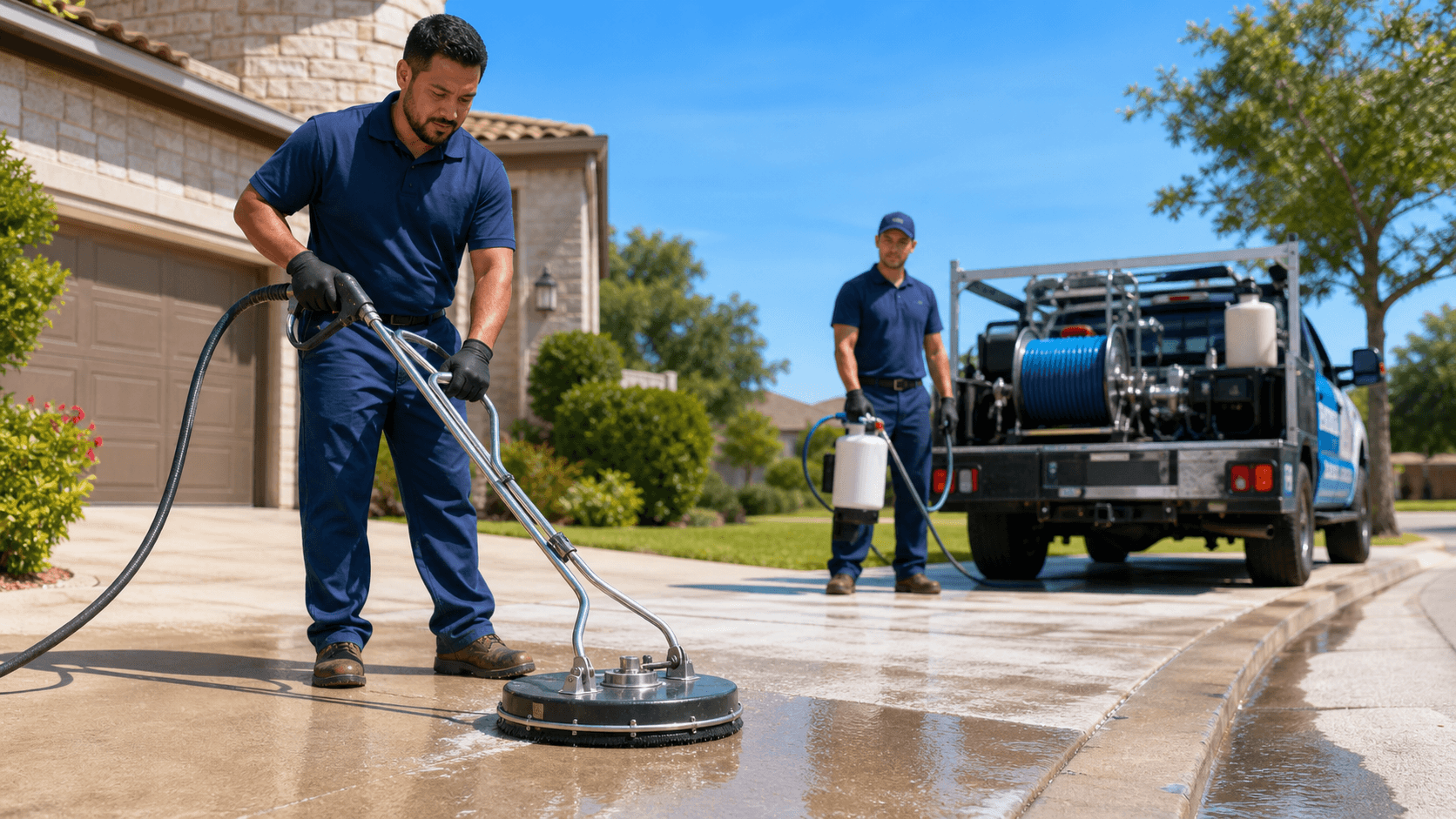
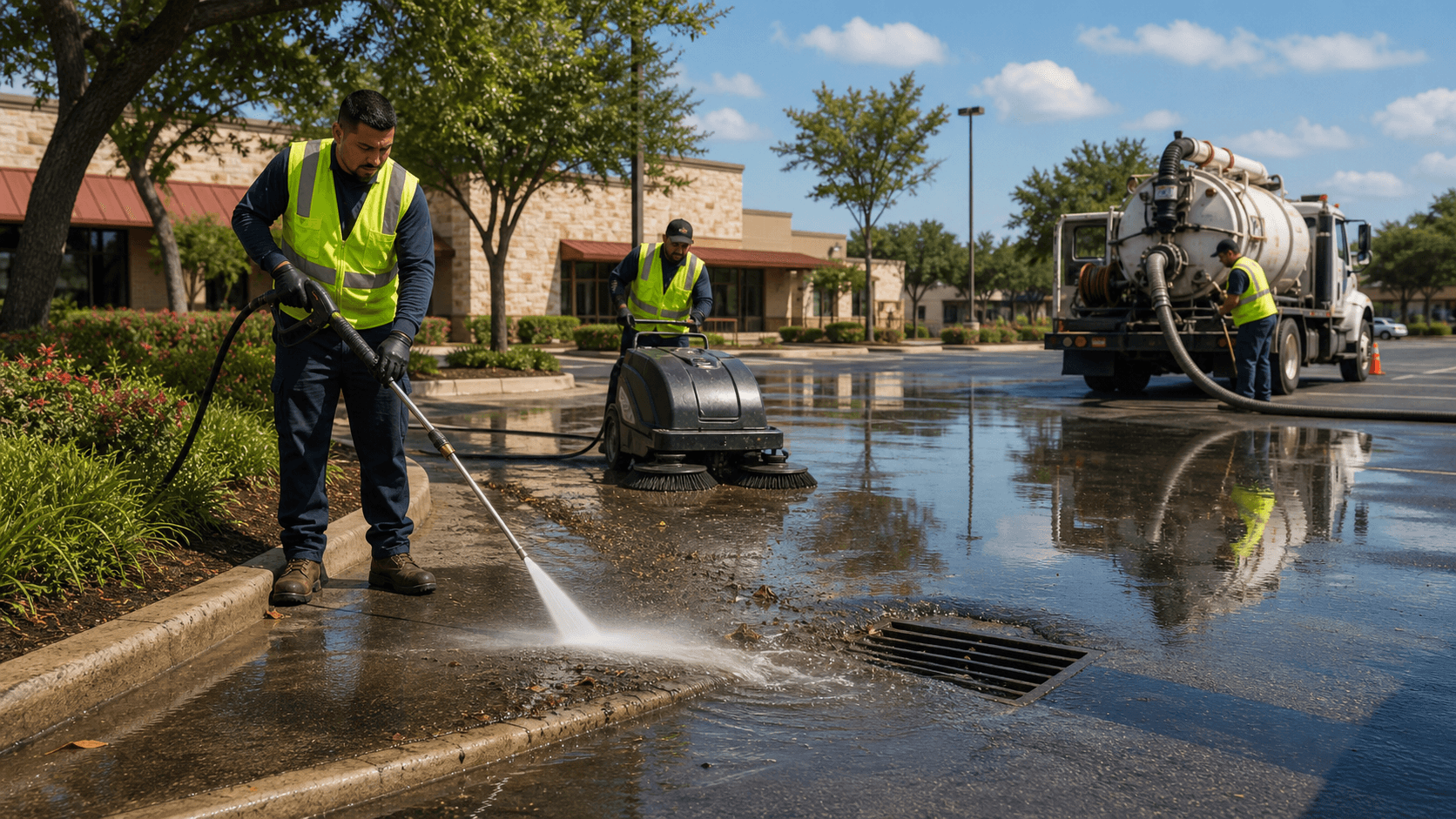
Professional pressure-washing plays a big part in preventing this. With the right equipment, we can break loose packed silt, clear flow lines, and wash debris out where it can be safely collected. When needed, vacuum cleanup helps remove the material instead of letting it wash into your system again. This kind of proactive cleaning helps reduce pooling, protect the pavement around drains, and cut down on sudden emergency repair needs.
Controlling Oil Sheen and Polluted Runoff From Vehicles
Everyday vehicle use adds another layer of trouble to a parking lot. Cars, delivery trucks, and fleet vehicles drip oil, grease, and fuel over time. Those dark spots may seem minor when the pavement is dry, but the first heavy rain tells a different story.
When monsoon rains hit:
- Oil and grease spread out into thin, slippery films
- Rainbow sheens appear across puddles and flow paths
- Contaminated water moves toward storm drains and nearby areas
This runoff is not just ugly. It can be a safety concern for people walking through the lot and a headache for property owners who care about what washes off their site. Left in place, these hydrocarbons can also break down pavement faster.
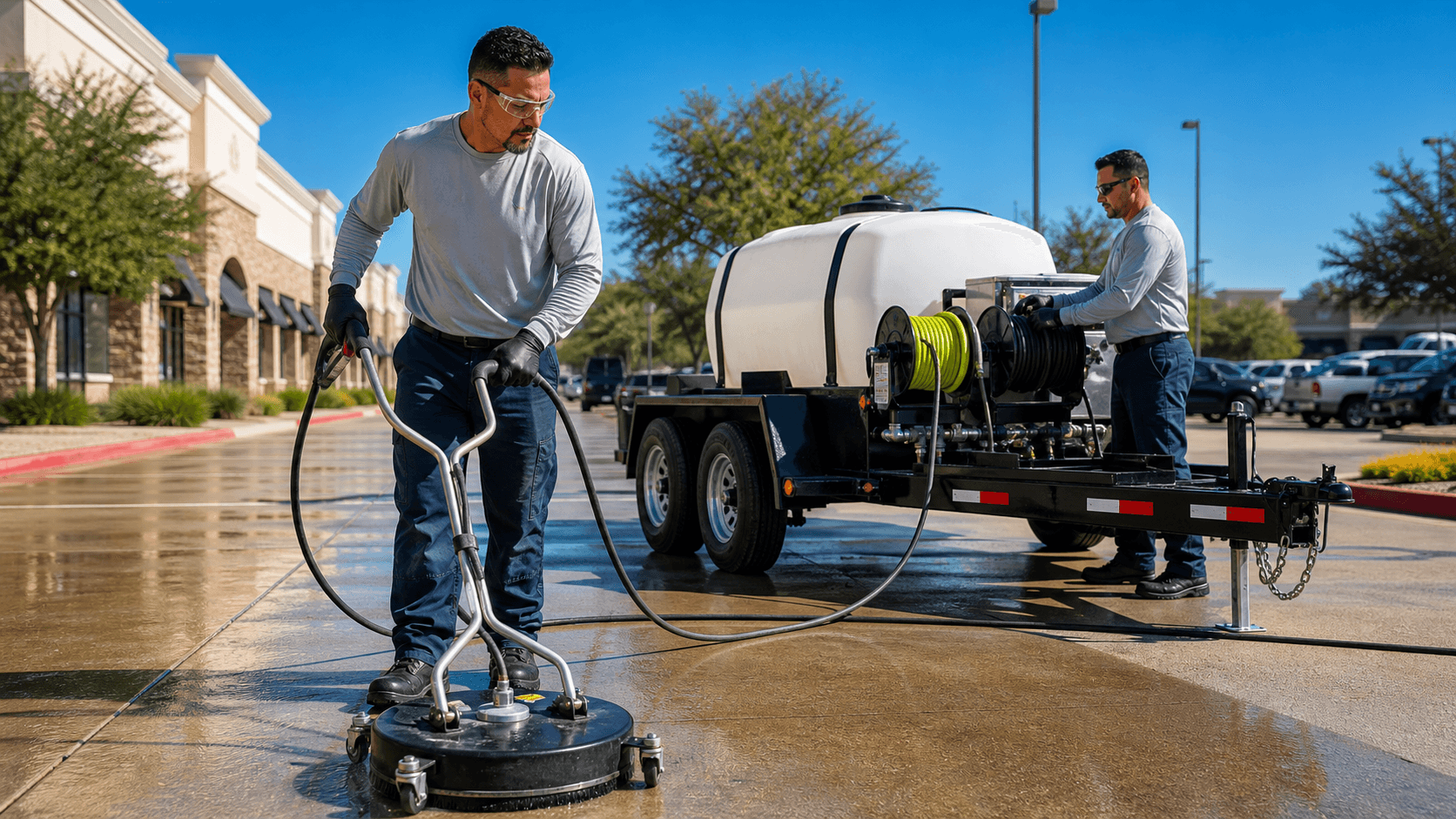
Targeted cleaning helps control these issues. With the right degreasers and hot-water pressure washing, we can lift and break down those oil and fuel residues instead of just pushing them around. Good methods also pay attention to:
- Where wash water flows during cleaning
- How oily material is contained and picked up
- Keeping contaminants from simply shifting into another problem area
When parking lot cleaning in San Antonio, TX is done with runoff control in mind, you get a cleaner, safer surface and help limit what ends up in your drains and neighboring properties during big storms.
A Simple Seasonal Cleaning Plan for Monsoon Rains
Monsoon season may feel unpredictable, but your cleaning plan does not have to be. A simple, repeatable schedule helps keep your pavement ready for whatever the weather throws at it.
A useful pattern for many San Antonio properties looks like this:
- Pre-storm cleaning in late spring to clear winter dust, silt, and debris
- Mid-season touch-ups during peak storms to handle fresh buildup
- Post-season washing to remove leftover silt, stains, and pollutants
During a pre-storm visit, a thorough cleaning usually focuses on:
- Pressure washing to clear surface dirt and trash
- Cleaning around drains, inlets, and flow lines
- Degreasing heavy oil spots in high-traffic areas
This is also a smart time to pair cleaning with other pavement care, such as:
- Crack sealing to block water from entering the base
- Sealcoating to shield the surface from water and sun
- Re-striping to keep lines bright and easy to see in the rain
Custom plans work best. A small retail lot, for example, may only need seasonal service, while a busy commercial center with constant traffic and deliveries might benefit from more frequent cleaning and checks. The goal is the same in every case: extend pavement life, reduce slip and trip risks, and give customers, employees, and tenants a better experience every time they pull in.
Working with a Local Pavement Team Before the Next Storm
Getting ahead of monsoon rains is much easier than scrambling after the first big storm. A local pavement team that understands San Antonio weather and soil conditions can look over your lot with fresh eyes and help you spot trouble before it grows.
Property and facility managers can prepare by:
- Noting any regular flooding or slow-draining areas
- Gathering tenant or customer complaints about puddles or slick spots
- Taking photos or short notes when problems show up during storms
During an on-site walk, we look at the full picture, including surface condition, drainage paths, and the types of stains and buildup on your lot. From there, we can suggest a focused cleaning and maintenance plan that fits your property's size, use, and risk points. At Sparrow Pavement Solutions, our goal is simple: help keep San Antonio parking lots cleaner, safer, and ready for the next round of monsoon rains.
Get Started With Your Project Today
If your property is ready for a cleaner, safer, and more professional look, our team at Sparrow Pavement Solutions is here to help. Schedule your parking lot cleaning in San Antonio, TX so we can tailor a service plan to your business and traffic needs. We will work with your schedule, walk you through what to expect, and deliver a spotless result that reflects well on your customers and tenants.