Decoding Concrete Cleaning in San Antonio's Hard Water Climate
Hard water and dusty soil are a tough combo for concrete. In San Antonio, TX, driveways, sidewalks, and patios do not just get dirty, they hang on to stains like glue. If you feel like your concrete never really looks clean, you are not imagining it.
In this article, we will break down why our local water and soil make stains so stubborn, what is really going on inside that slab, and how a smart cleaning plan can help. We will also talk about timing, long-term care, and when it makes sense to bring in a professional surface care team.
Why Hard Water Makes San Antonio Concrete so Stubborn
San Antonio is known for hard water. That means the water is full of minerals like calcium and lime. Our soil is also mineral-heavy and dusty, so every time water runs across your concrete, it leaves a bit of that behind.
Over time, those minerals mix with:
- Dust and soil from the yard or street
- Oil drips and fluid leaks from vehicles
- Organic growth like algae, mildew, and mold
These minerals help the grime stick. They can leave light-colored crusty patches, haze, or lines that match sprinkler spray. That build-up can grab onto dirt and oil and hold it tight, so stains in our area can be much harder to remove than in places with softer water.
Local knowledge matters. Cleaning concrete here is not just about blasting away dirt. It takes a plan that fits San Antonio's water, soil, and weather. That is why we pay close attention to how hard water is affecting each surface we see.
Understanding What Is Really Staining Your Concrete
Not all stains are the same, even if they look alike at first glance. Around San Antonio, we often see a mix of:
- Hard water mineral deposits and sprinkler lines
- Dark tire marks and hot tire pickup from vehicles
- Oil and fluid leaks that soak into the slab
- Rust marks from irrigation systems or metal furniture
- Green or black algae and mildew in shaded or damp spots
- Grease, food, and drink spills near grills and pool areas
Concrete is porous, so it acts like a sponge. Surface dirt sits on top, but liquids and fine particles can sink in. This is why a quick rinse with a hose, or even a light pressure wash, might brighten the surface but leave deep stains untouched.
The real trouble usually lives below the top layer. A professional inspection looks at:
- How deep the stain has gone
- Whether it is mostly mineral, oil, rust, or organic
- How the surrounding grading and sprinklers are affecting it
When we know what is actually causing the stain, we can pick the right cleaning method instead of wasting time and effort on something that will not work.
How Hard Water Changes Concrete Cleaning Strategy
Concrete cleaning in San Antonio, TX is not one-size-fits-all. Hard water affects both the type of stains you see and the chemistry needed to clean them. If you only turn up the pressure, you might blast away a bit of dirt but leave the minerals and deep grime behind.
Pushing pressure too high can also:
- Etch or scar the concrete surface
- Damage expansion joints or caulk
- Rough up the finish so it collects dirt faster
Instead of only relying on pressure, we focus on the right cleaning solutions. Mineral-neutralizing agents can help loosen hard water deposits so they rinse away more easily. Degreasers can break down oil, and other cleaners can target algae or mildew.
We also balance:
- Water temperature
- Pressure level
- Contact time for detergents and cleaners
This careful mix lets us break up mineral buildup and stubborn grime while protecting joints, nearby coatings, and landscaping. The goal is clean, healthy concrete, not a surface that looks "burned" or streaky.
Seasonal Timing Tips for San Antonio Concrete Care
By mid-June, most of us are running sprinklers more, spending time outside, and hosting backyard gatherings. All that activity means more tire tracking, sunscreen spills, food drips, and irrigation stains on concrete.
Different times of year bring different issues in San Antonio:
- Spring: Pollen, mildew, and fresh organic growth in shaded areas
- Summer: Heavy vehicle traffic, grill grease, drink spills, and extra sprinkler use
- Fall: Leaf tannins, acorns, and more dust and debris on driveways and sidewalks
- Winter: Ongoing irrigation marks and mineral lines when lawns still get watered
In hotter months, it helps to plan cleaning during the cooler parts of the day. That gives cleaners time to work without drying too fast and reduces stress on the surface.
A simple maintenance rhythm for local homes and commercial properties can be:
- A yearly deep concrete cleaning
- Lighter follow-up rinses or spot treatments during high-use seasons
- Extra attention at entry points, shaded walkways, and pool or grill areas
This approach keeps stains from baking in for years and becoming much harder to treat later.
When Professional Cleaning Makes Financial Sense
It can be tempting to grab a small pressure washer and generic cleaner and tackle stains yourself. The problem is that hard water, porous concrete, and the wrong technique can lead to expensive damage.
DIY cleaning can cause:
- Etched or striped surfaces from uneven pressure
- Chipped edges and damaged expansion joints
- Water forced under slabs or into cracks, which can weaken the base over time
On the other hand, regular professional concrete cleaning can help protect more than just the slab. When concrete stays cleaner, it is easier on nearby asphalt, sealers, and epoxy coatings. Grit and grime are abrasive, so removing them early can reduce wear and tear before it turns into bigger problems.
For commercial properties, there is also the benefit of bundling services in one visit. Pressure washing, sealing, and line striping can work together to improve curb appeal, keep surfaces easier to maintain, and support safer foot and vehicle traffic.
Protecting Clean Concrete From Future Hard Water Damage
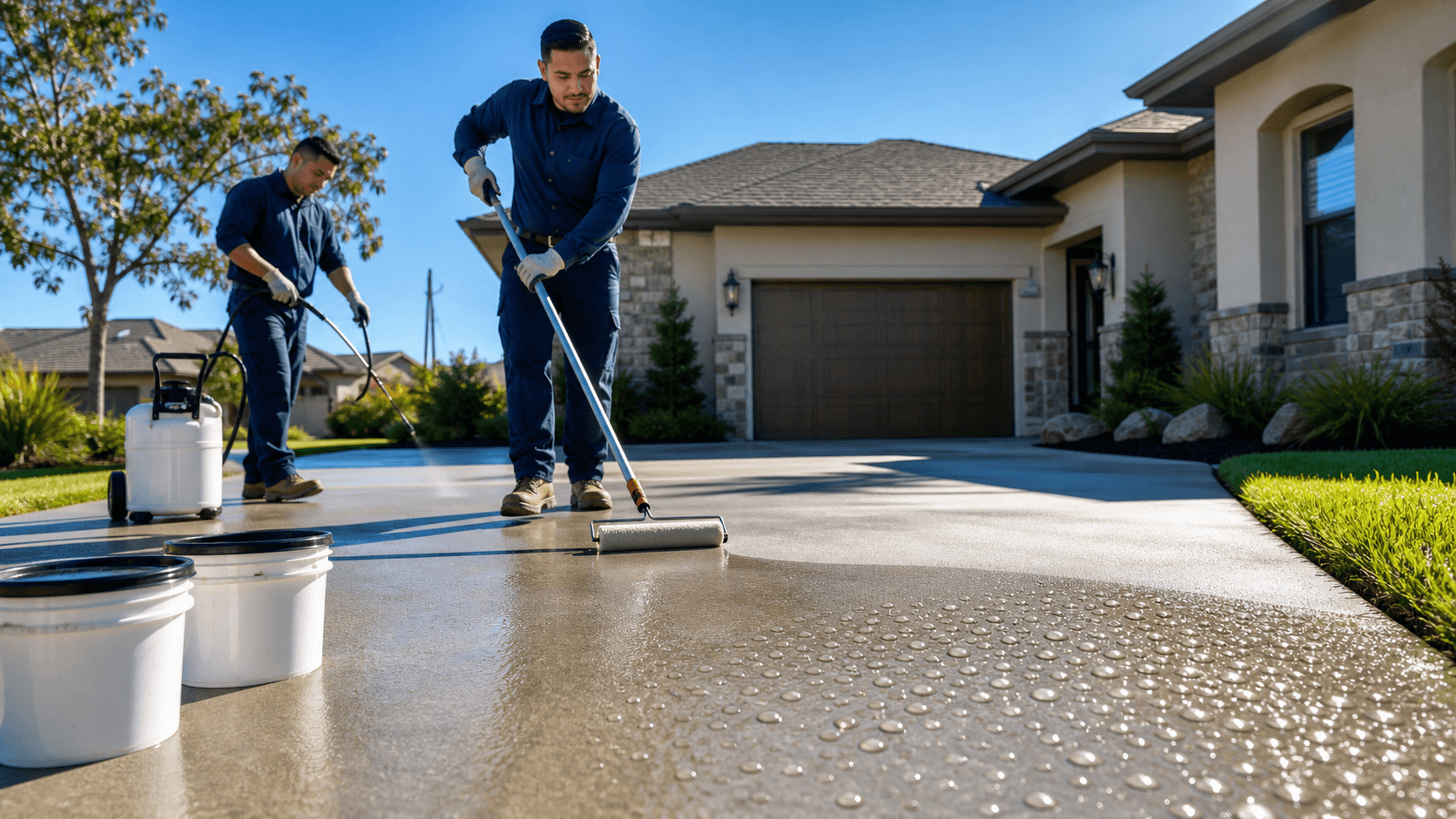
Once concrete is clean, the next step is keeping it that way as long as possible in a hard water climate. Sealers and other protective treatments can help resist:
- Mineral deposits from sprinkler overspray
- Rust from irrigation systems and metal fixtures
- Oil drips, grease, and food spills
- Organic staining from algae and mildew
Sealing is especially helpful around driveways, pool decks, and high-traffic walkways, where stains and wear show up fastest.
Simple habits also make a big difference:
- Rinse off fresh spills before they dry and soak in
- Adjust sprinkler heads so they are not constantly soaking concrete
- Fix leaky vehicles or place drip trays where they park
- Keep an eye on shaded, damp areas so algae does not get a head start
When we look at a property, we pay attention to how the space is used, how much traffic it gets, how old the concrete is, and how exposed it is to water and sun. That helps us decide if sealing alone makes sense, or if other options, like added coatings in some areas, would be better for long-term protection.
Keeping concrete in San Antonio clean is not just about looks. It is about working with our hard water, dusty soil, and busy outdoor life instead of fighting them. With the right strategy and consistent care, your concrete can stand up better to daily use and stay looking good far longer.
Get Started With Your Project Today
If you are ready to restore your concrete surfaces, we are here to help with professional results and flexible scheduling. Book your concrete cleaning in San Antonio, TX now and let Sparrow Pavement Solutions handle the rest. Our team will assess your property, explain your options, and provide a clear, upfront plan. Take the first step today so your concrete can look cleaner, brighter, and better protected.